


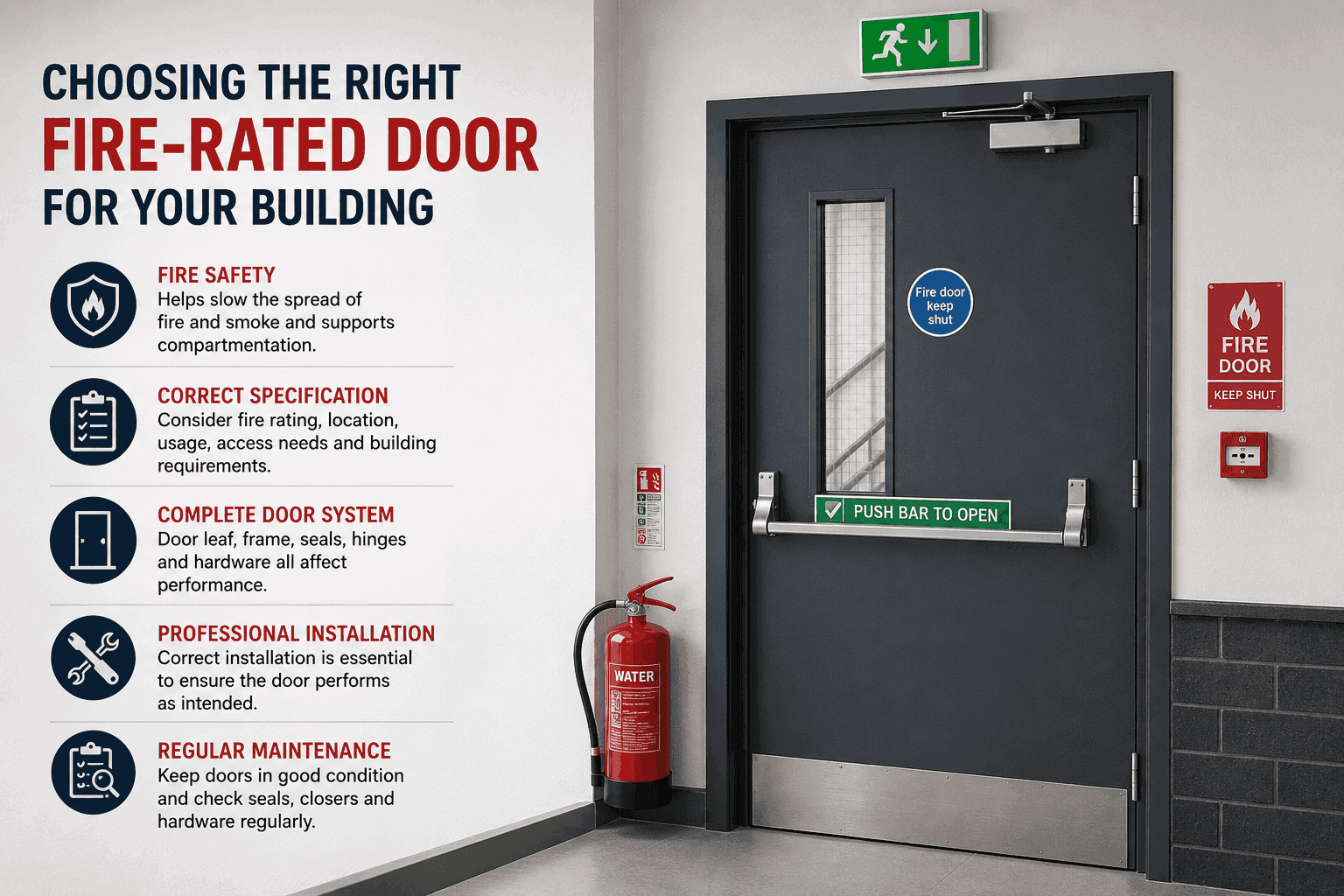
Fire-rated doors play an important role in commercial building safety. They are designed to help slow the spread of fire and smoke when correctly specified, installed and maintained. Choosing the right fire-rated door depends on the building, location, usage, access requirements and the level of fire resistance needed.
For commercial premises, fire-rated doors may be required in corridors, stairwells, plant rooms, escape routes, service areas, internal divisions and high-risk areas. The correct specification should always be based on the building’s fire strategy, risk assessment and relevant safety requirements
What is a fire-rated door?
A fire-rated door is a door system designed to provide fire resistance for a specified period of time. It is usually made up of the door leaf, frame, seals, hinges, hardware and closing mechanism.
The full door system matters. A fire-rated door should not be judged on the door leaf alone, because the frame, ironmongery, seals and installation all affect performance.
Depending on the building and location, a fire-rated door may need suitable:
- door leaf construction,
- frame,
- fire seals,
- smoke seals,
- hinges,
- lock or latch,
- door closer,
- signage,
- glazing if required,
- certification or supporting documentation.
Why fire-rated doors matter in commercial buildings
Fire-rated doors help support building safety by compartmentalising areas and helping control the spread of fire and smoke. In commercial buildings, this can help protect escape routes, separate higher-risk areas and support safer evacuation.
They are commonly used to help protect:
- staff,
- visitors,
- customers,
- escape routes,
- stock rooms,
- plant rooms,
- service areas,
- corridors,
- stairwells,
- internal fire compartments.
A correctly specified fire-rated door can be an important part of a wider fire safety strategy.
Where are fire-rated doors commonly used?
Fire-rated doors can be used in many commercial and industrial buildings. The exact location depends on the building layout and fire safety requirements.
They are often used in:
- offices,
- warehouses,
- factories,
- schools,
- retail premises,
- commercial units,
- apartment communal areas,
- plant rooms,
- service corridors,
- stairwells,
- emergency routes.
Different locations may need different specifications, so the right product should be chosen for the specific opening and purpose.
What should you consider when choosing a fire-rated door?
When choosing a fire-rated door, the first step is understanding where the door will be fitted and what it needs to do.
Key considerations include:
- required fire rating,
- internal or external location,
- pedestrian access needs,
- escape route requirements,
- building usage,
- opening size,
- traffic level,
- security needs,
- smoke control requirements,
- door hardware,
- durability,
- maintenance access,
- compliance requirements.
For example, a door used on a busy staff route may need a different specification from a door protecting a plant room or service area.
Fire rating, specification and correct installation
The fire rating is only one part of the decision. Correct specification and installation are just as important.
A fire-rated door should be suitable for the opening, fitted with compatible components and installed correctly. If the frame, seals, hinges, closer or hardware are unsuitable, the door may not perform as intended.
This is why fire-rated doors should be treated as a complete system rather than a standalone door leaf.
Fire-rated doors vs standard steel doors
Standard steel doors and fire-rated steel doors can look similar, but they are not the same.
A standard steel door may provide durability, access control and physical security, but it may not provide the required fire resistance. A fire-rated steel doorset is specifically designed and specified to support fire protection requirements.
A fire-rated door may be the better option where the opening forms part of a fire compartment, escape route or protected area. A standard steel door may be suitable where durability and security are needed but fire resistance is not required.
Maintenance and ongoing responsibility
Fire-rated doors should be maintained so they continue to operate correctly. Damage, poor alignment, missing seals, faulty closers or unsuitable hardware can affect performance.
Regular checks can help identify:
- damaged seals,
- door alignment issues,
- faulty hinges,
- broken closers,
- damaged frames,
- gaps around the door,
- damaged glazing,
- incorrect hardware,
- signs of impact damage.
Fire-rated doors should close properly, latch where required and remain free from damage that could affect their purpose.
Fire-rated door advice in Belfast and Northern Ireland
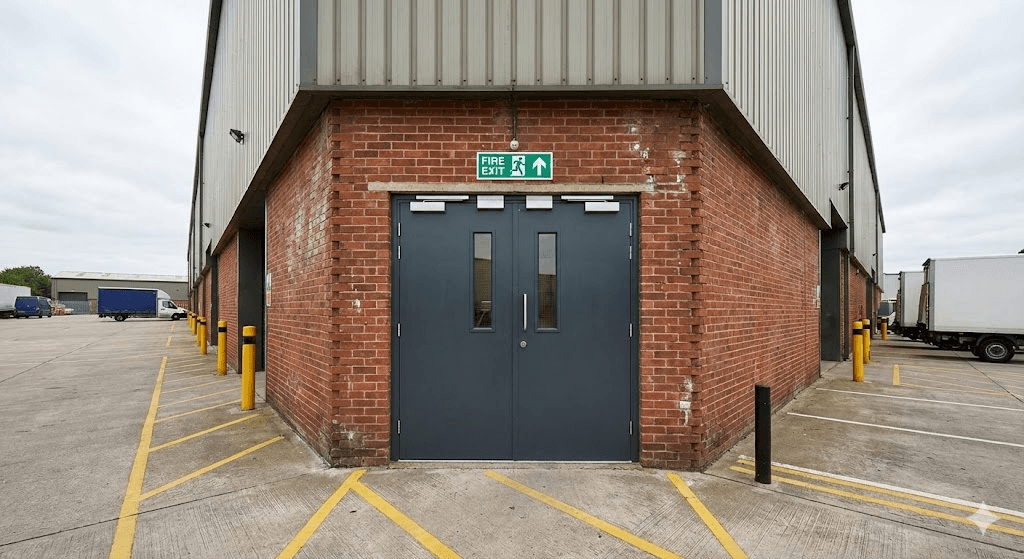
Pressford Shutters & Shopfronts supplies steel fire doors, fire-rated steel doorsets, personnel doors and emergency exit doors for commercial, industrial and public-sector premises across Belfast and Northern Ireland.
The right fire-rated door depends on the building, location, access requirements, fire safety needs and how the door will be used day to day. Pressford can advise on suitable steel door and fire-rated door options for your premises.
Need help choosing the right fire-rated door?
If you need fire-rated doors for a commercial building, contact Pressford Shutters & Shopfronts to discuss your requirements and arrange advice for your site.

Pressford Shutters